5 Lead Guitar Myths That Are Holding You Back (And How to Fix Them)

Playing a guitar solo is one of the coolest ways to express who you are. Every bend, every note, every phrase that comes out of your hands is yours and nobody else's.
But over the years, teaching players at every level, I keep running into the same handful of myths. These are the ideas that quietly hold guitarists back from playing the way they actually want to play. So let's break them down one at a time and get you playing with more confidence and more of your own voice.
I actually covered these in a video too, if you'd rather watch than read. Check it out below.
Myth 1: You Have to Play Insanely Fast to Be a Great Lead Guitarist
I get it. Speed is fun. I love ripping through a fast lick as much as the next guy. But here's a little test for you.
Next time you're watching someone shred on YouTube or Instagram, close your eyes and just listen. Not watch. Listen.
Does it grab you? Is it memorable? Does it make you feel something?
If you're honest, a lot of the time the answer is no. And that tells you something important.
Speed isn't what makes a solo great. Think about David Gilmour, Slash, Zakk Wylde, Joe Satriani, Kirk Hammett. These guys can absolutely play fast when they want to, but what makes their solos stick with you for decades is the melody. Even a guy like Yngwie, who's about as fast as it gets, weaves in melodies that hit you right in the chest.
So here's what I want you to remember. Some of the best solos ever recorded are slow and melodic. The pressure to play fast is pressure you're putting on yourself, and you can let it go. Focus on your phrasing instead. Bends, vibrato, dynamics. That's where the magic actually lives.
A great solo isn't about how many notes you can cram in. It's about how you play the notes you choose.
If you want a solid foundation to build all of this on, my Lead Guitar Apprentice course inside the Academy takes you from beginner to intermediate and gives you the tools to play expressive, confident solos without feeling like you have to shred nonstop.
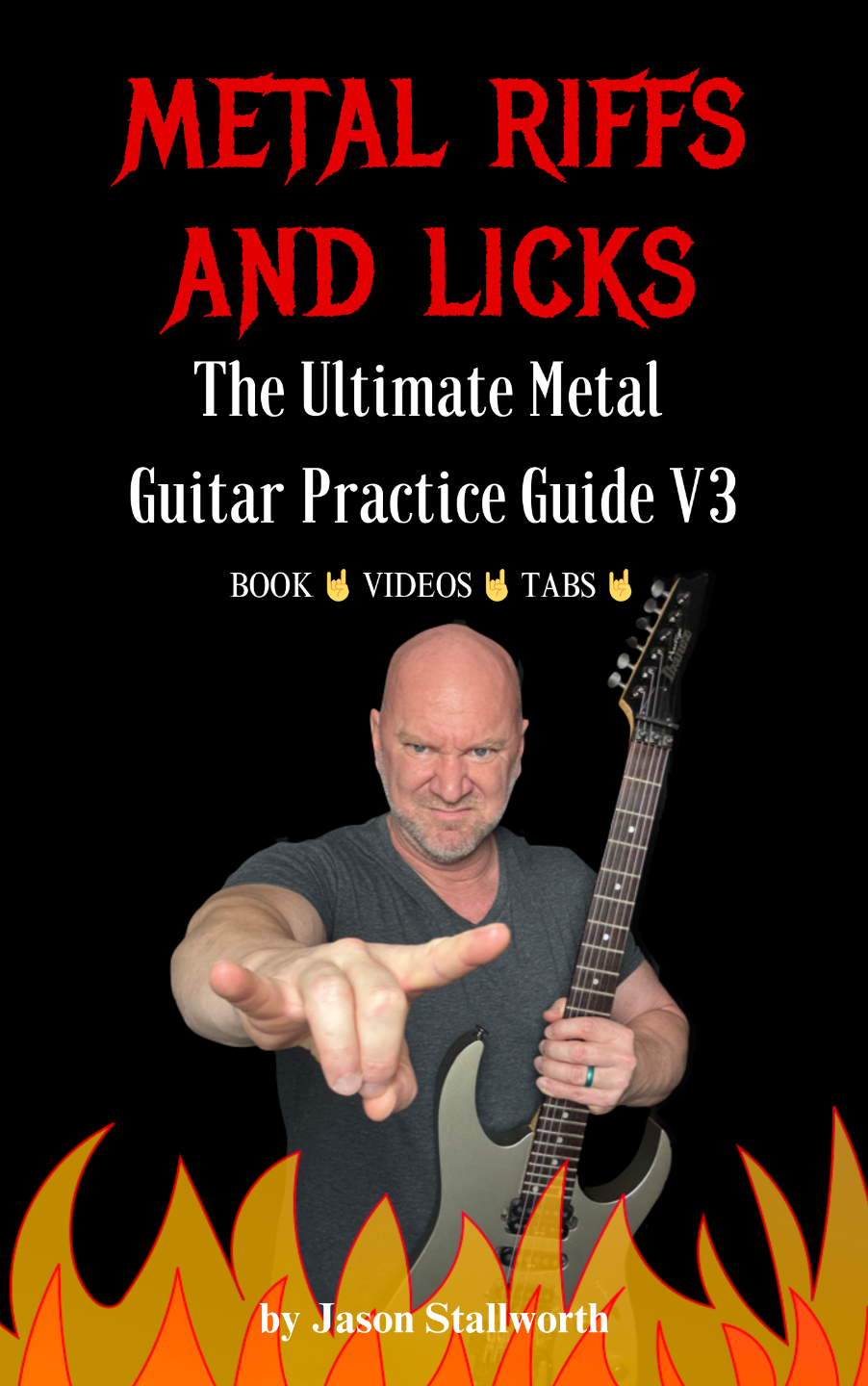
👉 Get my FREE Metal Riffs and Licks Ultimate Lesson Guide Here
Myth 2. You Need to Sound Like Your Favorite Guitarists
Like you, I've got players I look up to. Joe Satriani's melodies get me every time. Jeff Loomis and his blazing shred playing. Michael Amott from Arch Enemy, whose riffs, solos, and songwriting are just next level.
It's great to have heroes. But don't let that turn into pressure to sound exactly like them.
You don't have to sound like anyone but you.
Here's the truth. You already have something unique inside you. Your job is to give yourself permission to let that out, whether that means shredding across the neck or playing three simple notes with a ton of feel behind them.
Learn from the players you love, but don't box yourself in by them. Play around with different techniques, phrasing, and tones until something feels like it's actually yours. Your best playing happens the moment you stop chasing someone else's sound and start leaning into your own.
Myth 3. Better Gear Will Make You a Better Lead Guitarist
Ah, GAS. Gear Acquisition Syndrome. If you've never fallen into this trap, you're a stronger person than me.
I love gear. I'm a bit more of a minimalist than a lot of full-time musicians, but I'd still happily fill a room with ENGL, Orange, Mesa, Marshall, Blackstar, and Friedman amps if I could. Guitars, pedals, studio gear, all of it.
Here's the real problem with gear obsession, though. You end up spending more time tweaking knobs and chasing the "perfect" tone than actually getting better at playing.
Gear matters, don't get me wrong. But I'd bet if you handed any of the legends we talked about a random guitar and amp, they'd still sound like themselves. Why? Because they spent their time developing their own style instead of chasing gear. That's what I want for you, too.
Use your gear as a tool that supports your playing, not something you lean on instead of practicing. Work on your tone through your hands first, your pick attack, your vibrato, and your phrasing. Then worry about the amp. Your tone starts in your hands. Master that, and you'll sound like you, no matter what you're plugged into.
Myth 4. You Have to Know Advanced Music Theory to Play Great Solos
You've probably heard both sides of this argument a hundred times. "You're not a real musician if you don't know theory." Or, "I don't need theory, I just play by ear."
Honestly, both camps are a little right and a little wrong. The magic is somewhere in the middle.
I've been playing since 1989 and gigging since the early nineties, and I was never a theory nerd. I'm still not. But over the years, I realized I'd picked up a lot of theory just by playing so much, without ever sitting down and studying it. Once I noticed how much it had already helped me, I started applying it a little more on purpose, without letting it take over my playing.
You don't need a degree in music theory to use it well. A little bit goes a long way. Knowing which notes and chords fit a key, knowing your basic major and minor scales and how they connect, and having some awareness of the fretboard so you always land on your feet. That's plenty to start giving you real freedom in your playing.
And just as important, trust your ears. If something sounds good, keep it. If it sounds off, adjust it. Theory can help build your foundation, but your ears are what actually tell you if a phrase works. Use theory as a tool that serves your creativity, not a rulebook you're chained to.
Myth 5. Overcomplicating Makes Your Solos Sound Better
This one might be the biggest trap of all.
It's easy to think that cramming in as many notes as possible will impress other guitarists. But playing more doesn't mean playing better, and I've fallen into this trap myself plenty of times, both recording albums and playing live.
Even at my solo acoustic gigs, where I'm looping a rhythm and soloing over it live, I've caught myself overplaying because some part of me felt like a simple solo would look too easy. But every time I go back and listen to the recordings, the pattern is the same. The solos that blend melody with just a touch of shred always feel more natural and hit harder than the ones where I crammed in every note I could think of.
Ask yourself honestly, are you playing what actually feels right to you, or are you playing what you think other guitarists want to hear? If fast and technical is genuinely your thing, go for it. If melodic and expressive is more you, lean into that. Most people listening don't care how technical your solo is. They want to feel something.
And don't forget to leave space. The gaps between the notes are often where the real emotion lives. That's where a solo grabs someone and doesn't let go.
6 Practical Lead Guitar Tips to Help You Develop Your Own Style
Now that we've broken down the myths, here are six things you can start doing today to build a style that's genuinely yours.
- Improvise as much as you possibly can. Learning other people's solos is great for inspiration, but if that's all you do, you'll never find your own voice. Give yourself room to create.
- Record your own rhythm tracks and solo over them. Writing solos over your own chord progressions is one of the fastest ways to develop a sound that's uniquely you, and it'll level up your songwriting at the same time.
- Lean on techniques that bring your solos to life. String bends for emotion and vocal-like melodies and phrasing. Vibrato for power and sustain. Slides and legato for smooth transitions. These small details are what separate a great soloist from someone who just plays the right notes.
- Put playing ahead of gear. Your tone starts with your hands. Spend your time practicing, writing, and improvising rather than tweaking knobs.
- Use theory as a tool, not a rulebook. Learn the basics and let them serve you. There's no law that says your playing has to fit into a box. If it sounds good, it is good.
- Play with heart. At the end of the day, your solos are your voice. Make sure what comes out reflects what's actually inside you, because that's what makes your playing unforgettable.
👉 Join the Jason Stallworth Guitar Academy and Get Access Here
What's Next for You
Here's what I want you to take away from all of this. Focus on developing your own style, especially in your soloing.
Lead guitar is your voice on the instrument. You've already got something unique inside you. All you have to do is give yourself the freedom to let it out.
If you're newer to soloing or feel like you need a stronger foundation, my Lead Guitar Apprentice course is exactly where to start. It takes you from beginner to intermediate and builds you a solid foundation for rock and metal soloing.
If you're already at an intermediate level and beyond, check out Melodic Shredder. It's packed with short, killer solos to play along with that will push your technique and your creativity to the next level.
Monthly lessons, courses, and everything else are waiting for you inside the Jason Stallworth Guitar Academy. Come check it out.
Become the Metal Guitarist You Were Meant to Be
A clear, structured path to tighter riffs, cleaner technique, and real confidence, so you're never guessing what to practice next.
Jason Stallworth